

Sea Oats, Uniola paniculata
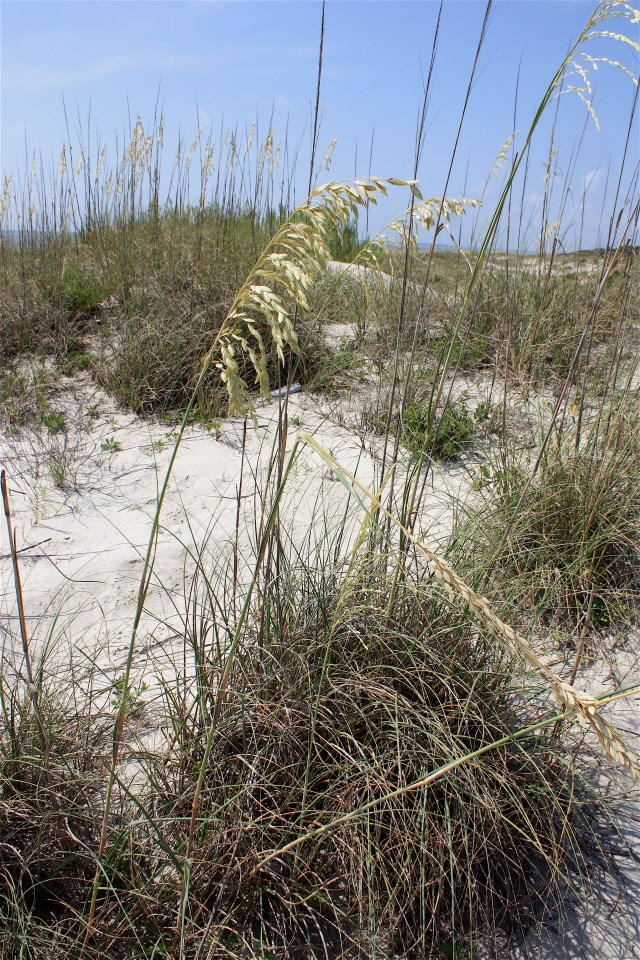
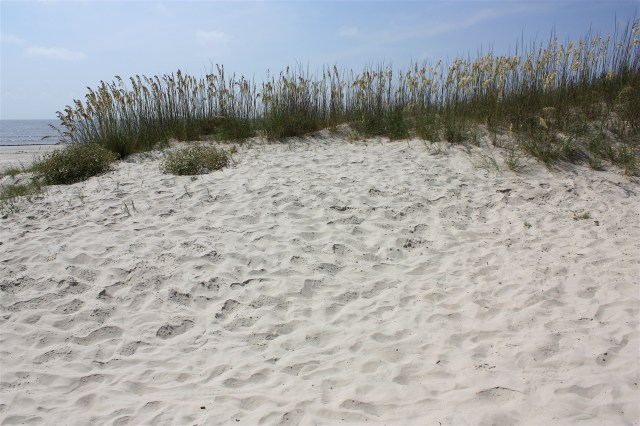
According to Georgia code 12-5-311, “It is unlawful for any person to cut, harvest, remove, or eradicate any of the grass commonly known as sea oats,” while tens of millions of dollars are spent on coastal development contracts on Jekyll Island’s fragile shore.

Georgia Beach
By Margaret Atwood
In winter the beach is empty
but south, so there is no snow.
Empty can mean either
peaceful or desolate.
Two kinds of people walk here:
those who think they have love
and those who think they are without it.
I am neither one nor the other.
I pick up the vacant shells,
for which open means killed,
saving only the most perfect,
not knowing who they are for.
Near the water there are skinless
trees, fluid, grayed by weather,
in shapes of agony, or you could say
grace or passion as easily.
In any case twisted.
By the wind, which keeps going.
The empty space, which is not empty
space, moves through me.
I come back past the marsh,
dull yellow and rust-colored,
which whispers to itself,
which is sad only to us.

Jekyll Island, Georgia
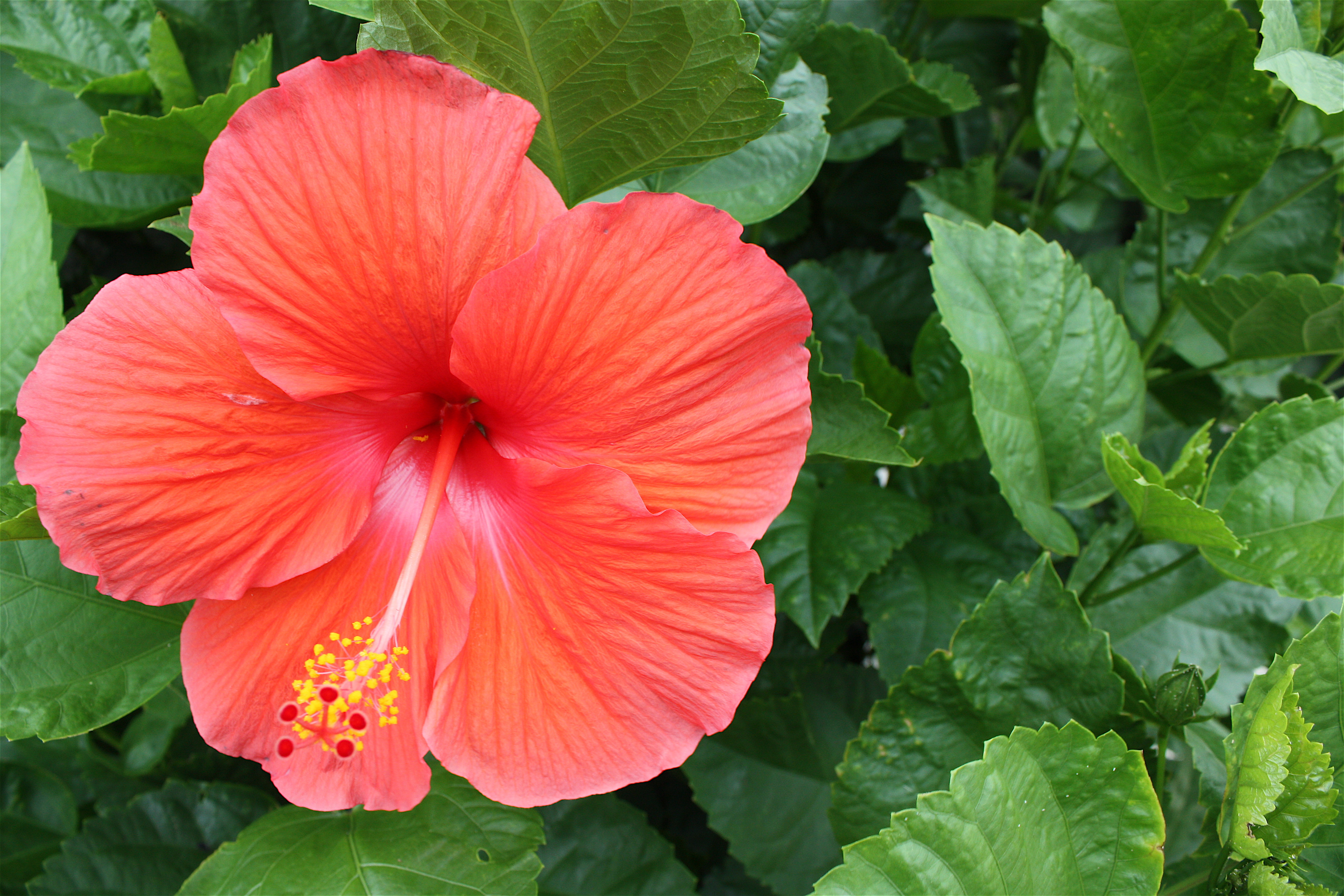
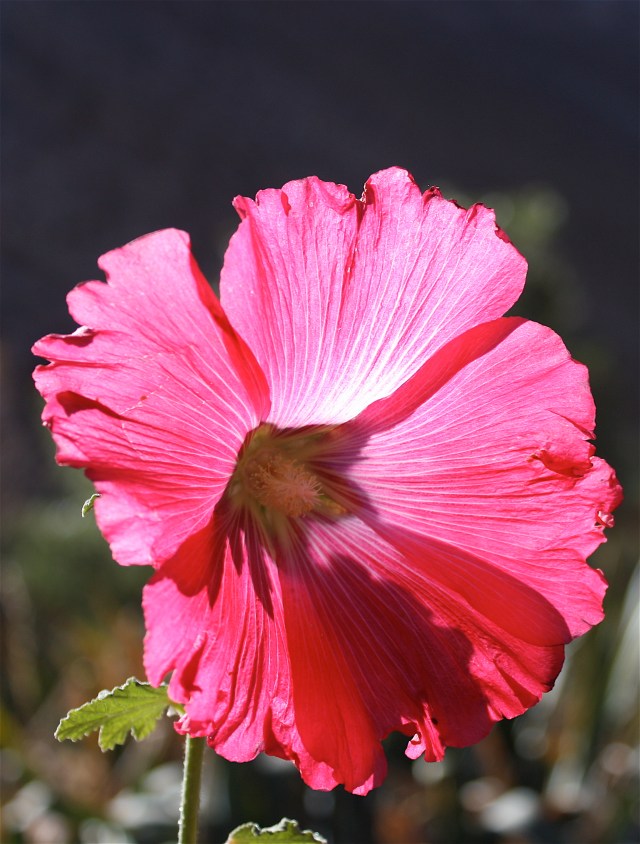
Hibiscus, Hibiscus rosa-sinensis



Questions to a Grasshopper
By Janisse Ray
Grasshopper, do you have a husband
waiting for you at home, under some sumac
roof? Or a son who yet needs you?
In the grasshopper bank, is your account
low? Is the Times waiting on an article
that you must squeak up out of your armored
head and from what you have deciphered
with those waving wands?
Is the rent do on your leaf, and do you
have to pay somebody for the water that falls free
from the sky? To whom do you owe your food?
Are you paying for grasshopper roads and
grasshopper schools and grasshopper hospitals
and grasshopper police and some kind of insect
library filled with wondrous leafy scrolls?
Do you have a president? Are you asked
to fight, to kill your own? Must you pay for it?
Or are you free, as you seem, to go
bursting through the stalks of dry grasses,
among strawberry leaves and yarrow,
curious and flippant, without direction,
unwary, obligated to nothing?
Emerson on the Art of Life
“We live amid surfaces, and the true art of life is to skate well on them.”
-Ralph Waldo Emerson

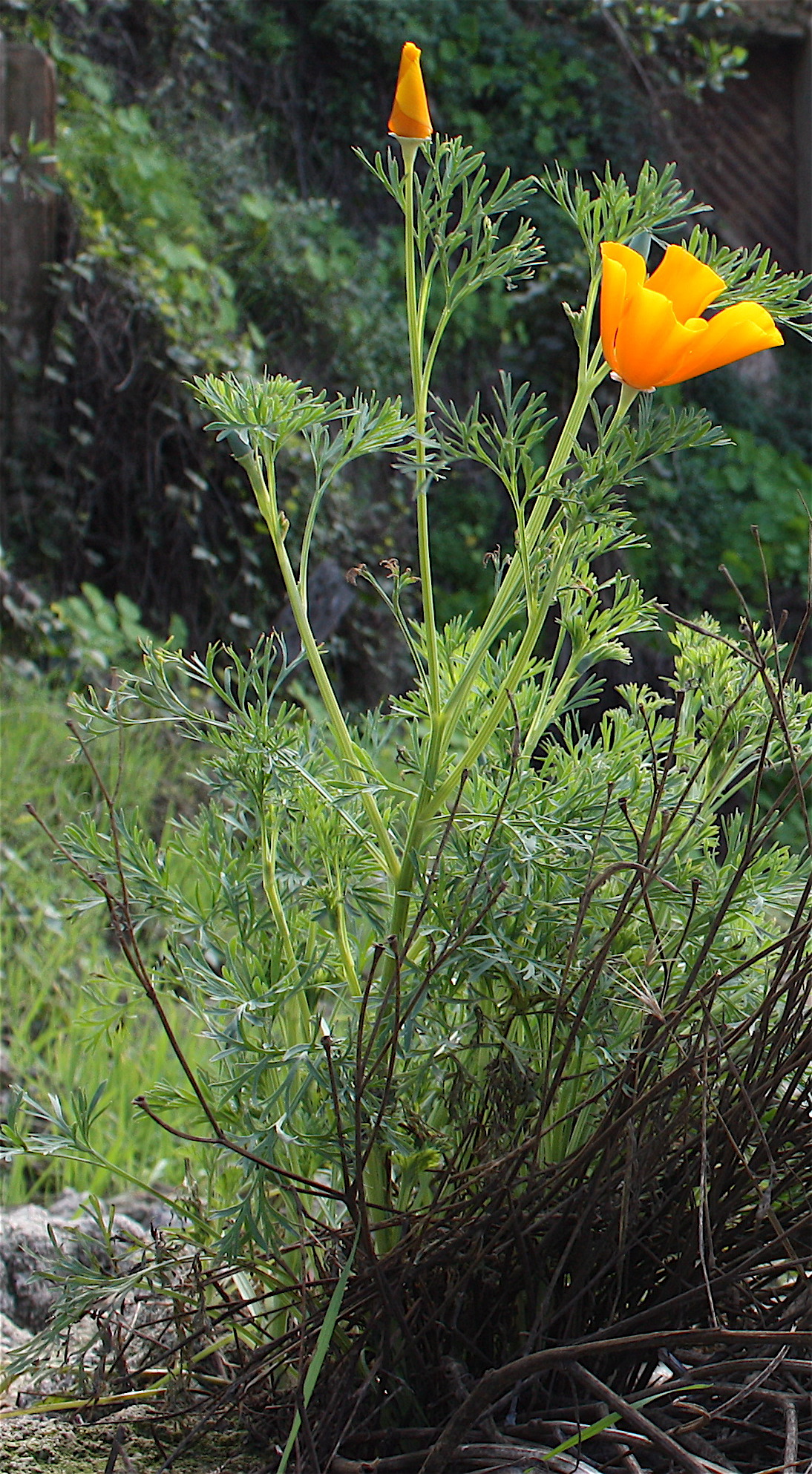
California Poppy, Eschscholzia californica
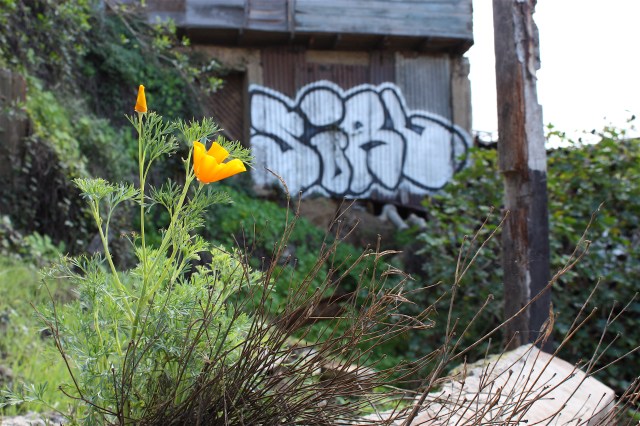
Mexican Aster, Cosmos bipinnatus
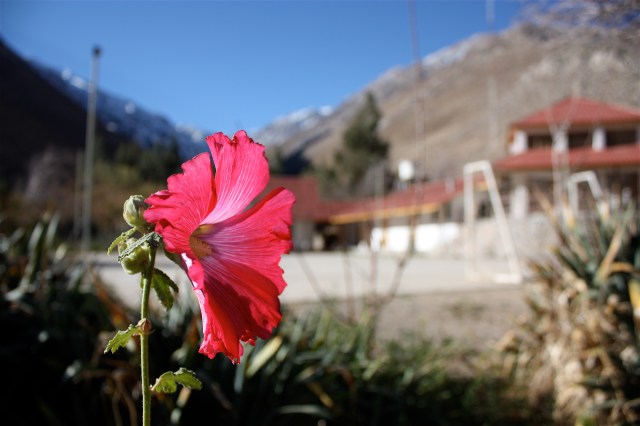
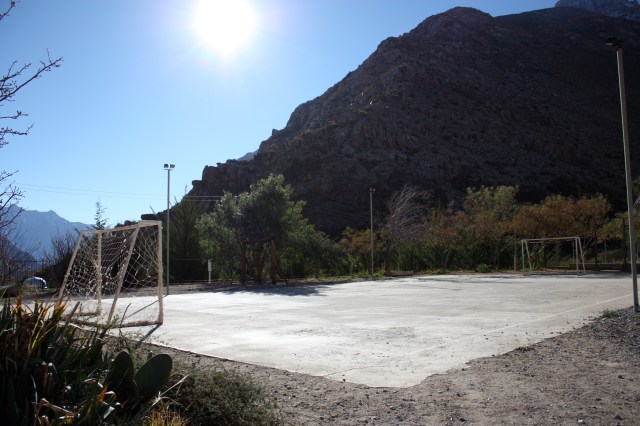
An elementary school rests in the background. The kids were on a two week winter break (in July), so I roamed the grounds.



Chilean Cactus, Eulychnia acida
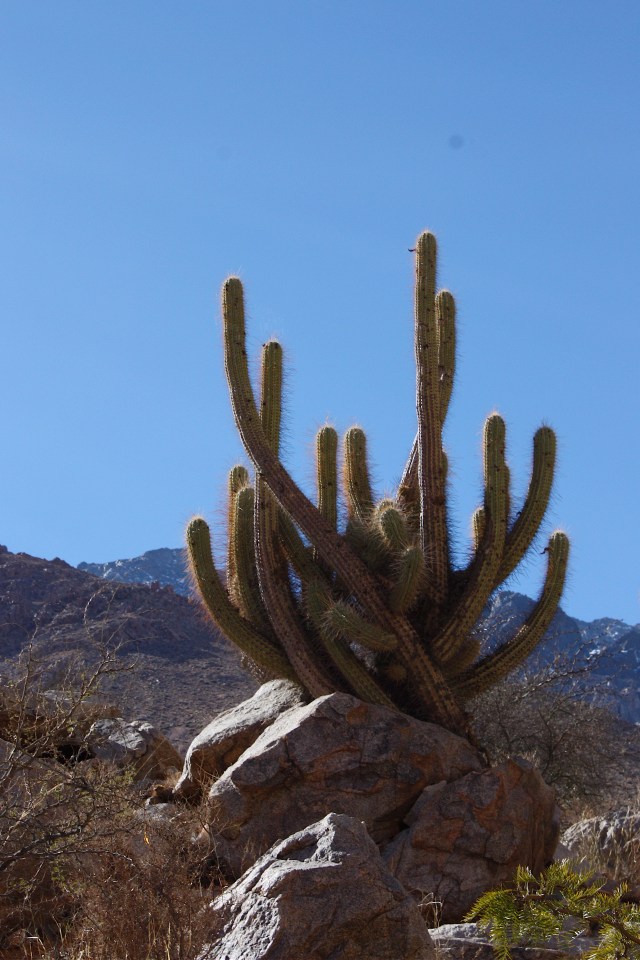
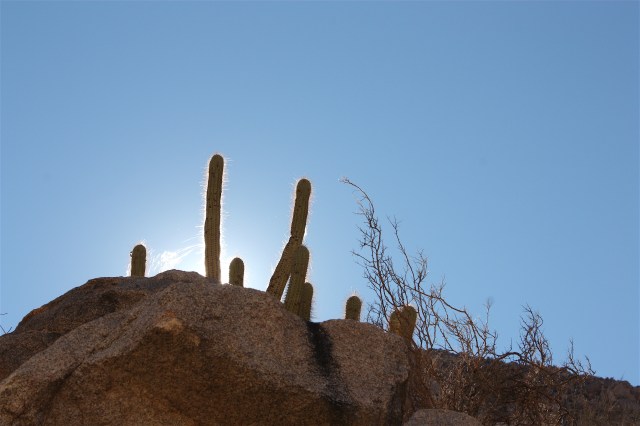
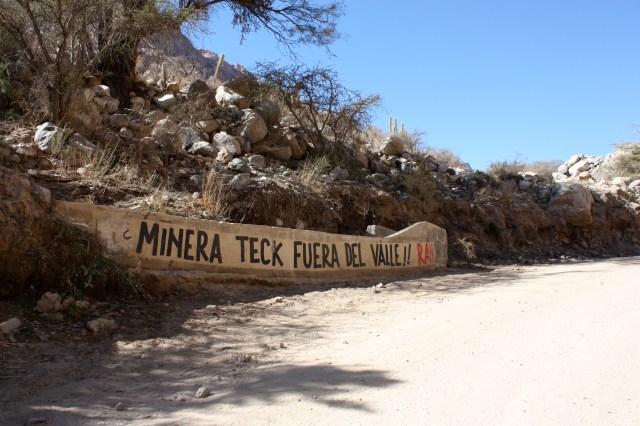
Disputes between locals and mining companies are ubiquitous throughout Chile. I took these photos in Cochiguaz fifteen days before the Copiapó mining accident.
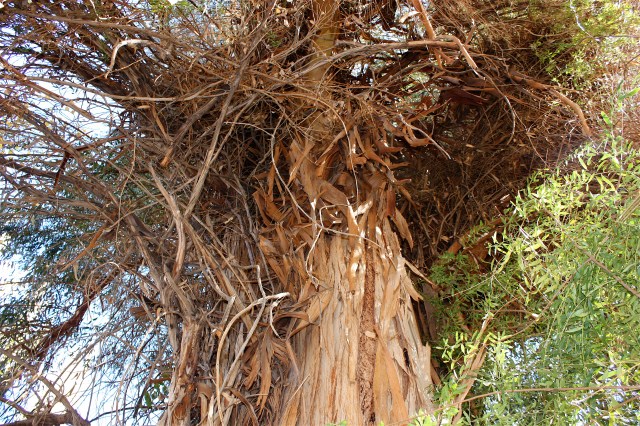
Eucalyptus Tree, Eucalyptus globulus




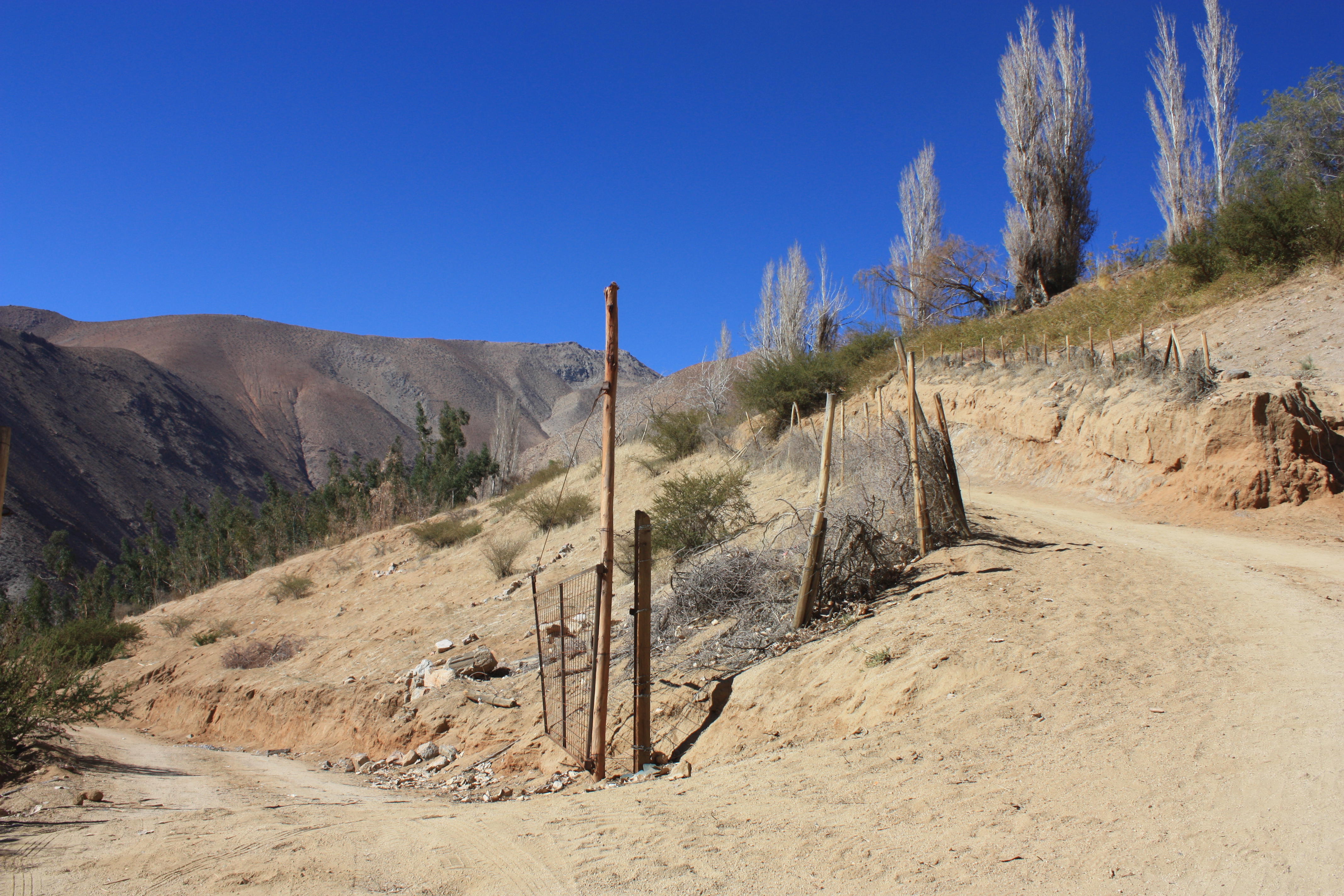
These photos were taken on the banks of the Rio Magico (Magic River), in Valle del Elqui, Peru. According to Robert Kirshner, a professor of science at Harvard University, “Chile has as good a claim as any place to be the center of the astronomical universe.” The Elqui Valley is the center of the earth’s gravitational force, and is said to have healing powers. I have never seen the night sky so clear.


Pimientero de Perú, Schinus molle

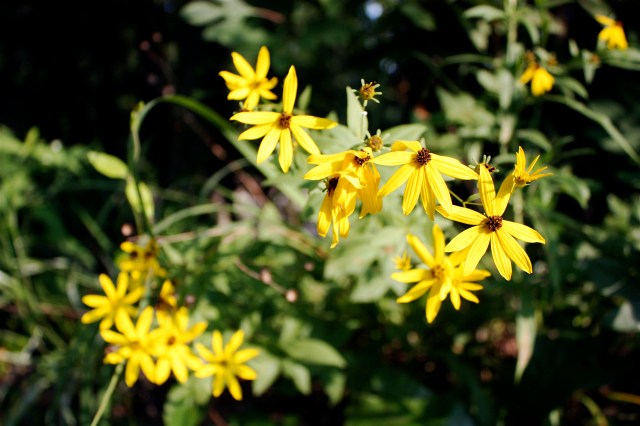
Thinleaf Sunflower, Helianthus decapetalus
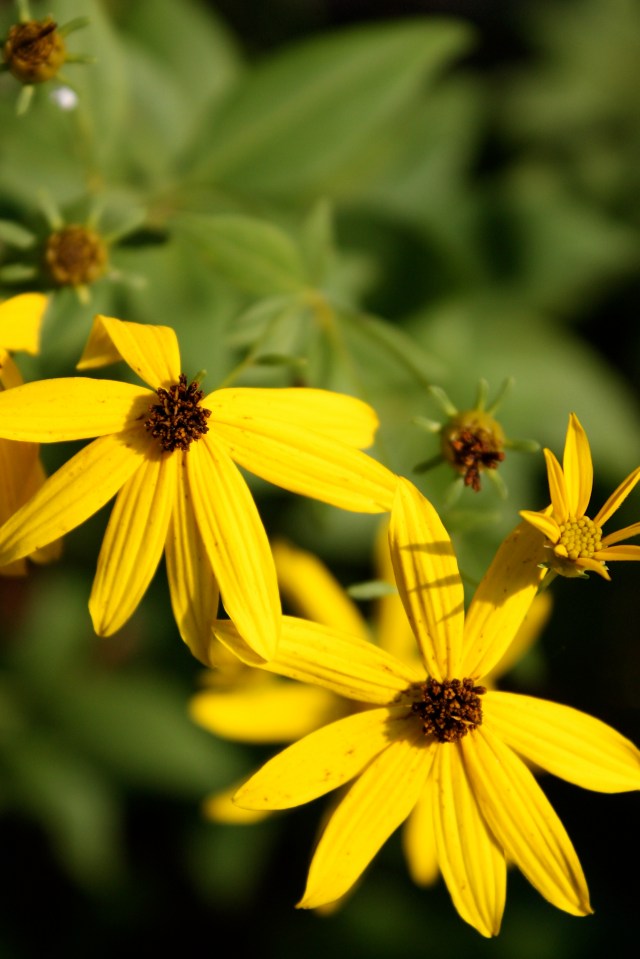
Early Blue Violet, Viola palmata
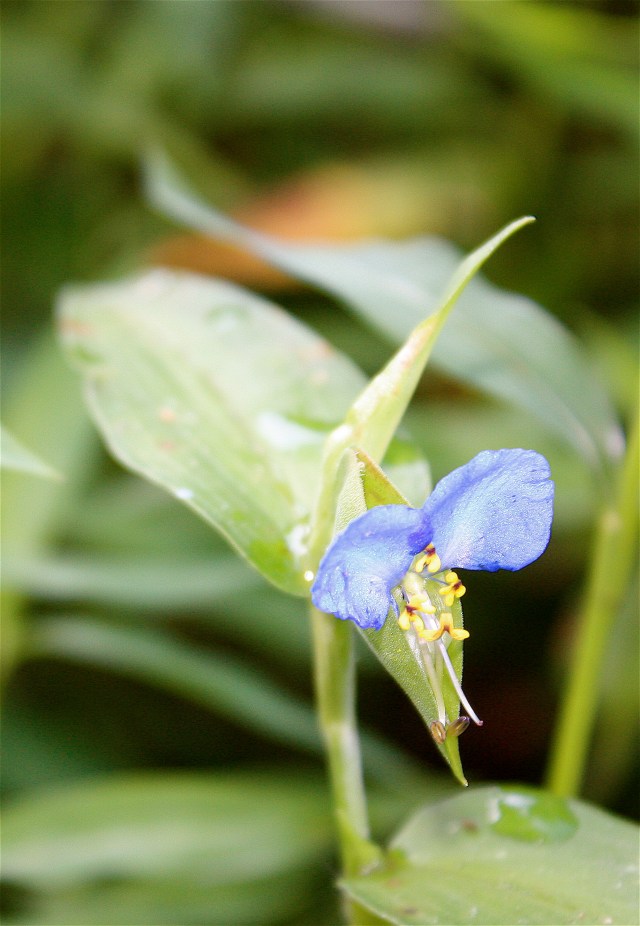
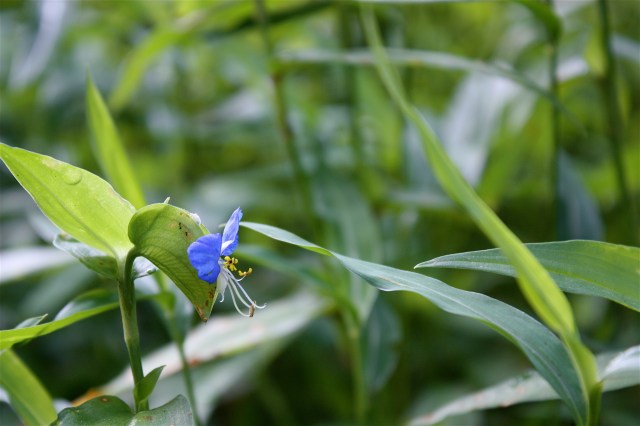
Spurred Butterfly Pea, Centrosema virginianum


Blackberry, Rubus moluccanus

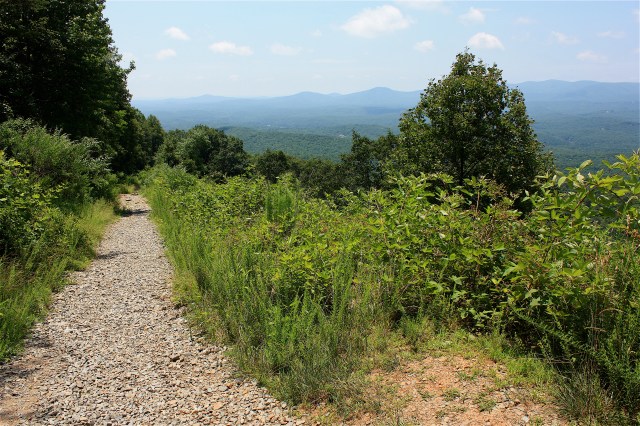
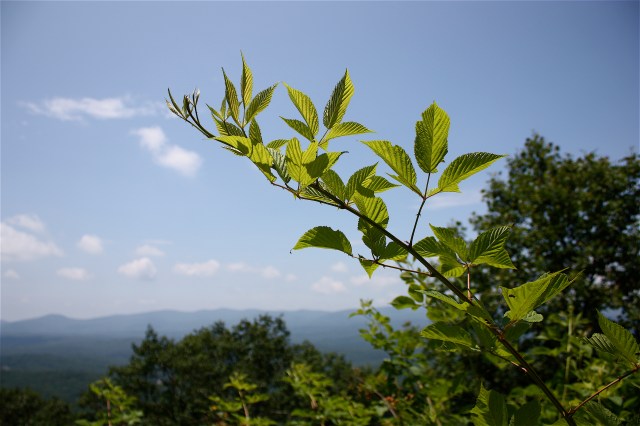
Oxeye Daisy, Chrysanthemum leucanthemum
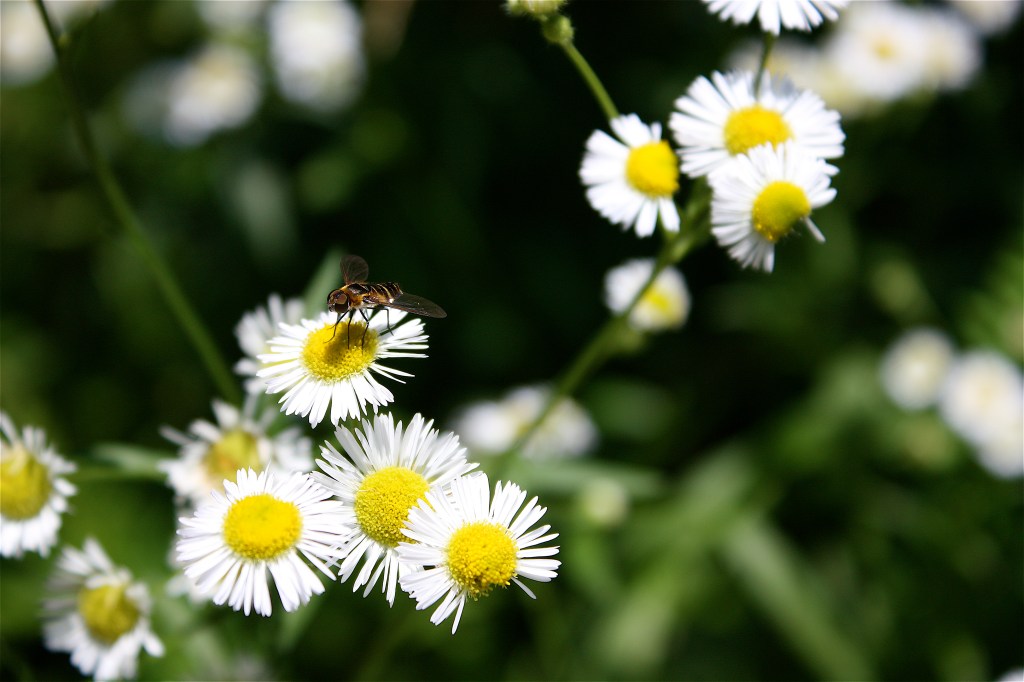
Nodding Thistle, Carduus nutans

Author Matt Hern is the founder of The Purple Thistle Centre in Vancouver, Canada. According to his website, “We run a 2500 sq/ft resource centre that has a ton of supplies, tools, materials, classes and workshops, and its all free. There’s a library, bike fixing shop, computer lab, silkscreening room, animation facility and lots else. And maybe best of all, the whole thing is run by a youth collective that controls all the day-to-day operations and really runs the place.”

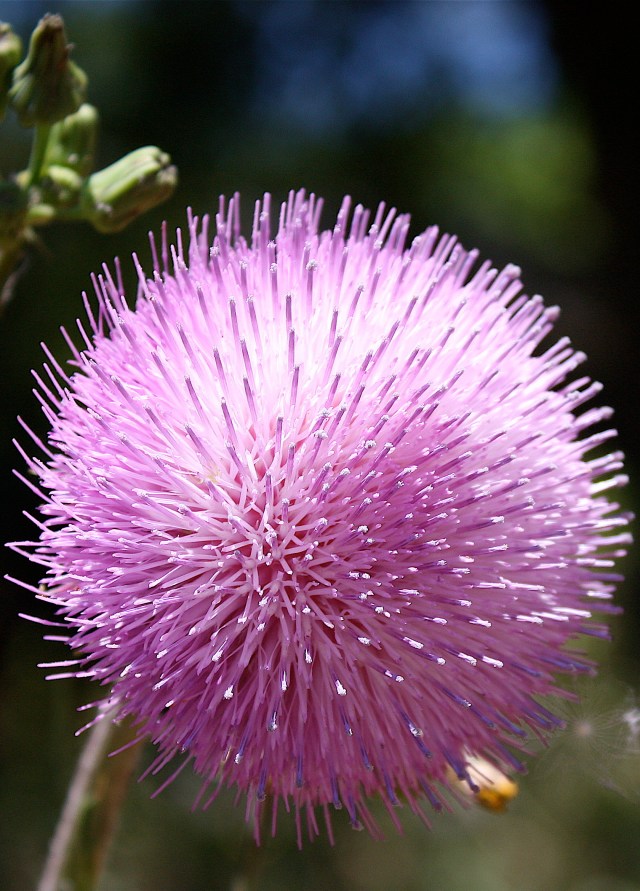
Guerilla gardening is also offered at The Purple Thistle Centre.
Devil’s Backbone, Pedilanthus tithymaloides
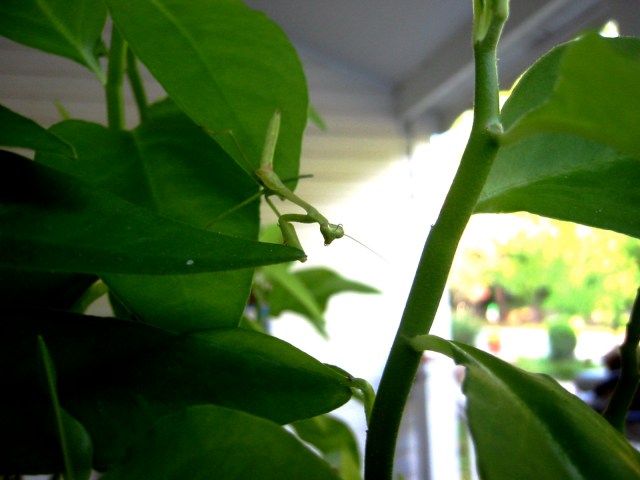


Hooded Pitcher Plant, Sarracenia minor
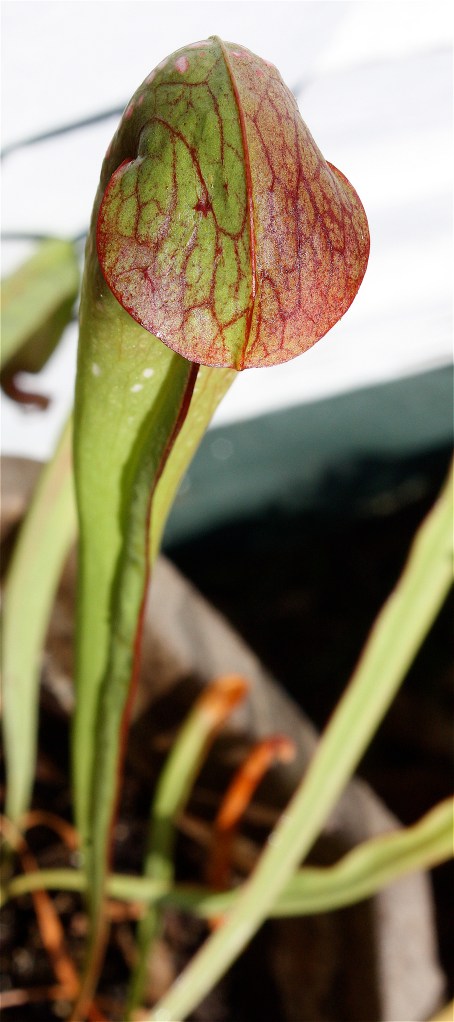
Our classroom’s resident Sarracenia minor spends the summer at home on the porch. Although our classroom windows provide ample sunlight for plants on the sill (and a spectacular view of the butterfly garden), these carnivorous classmates don’t get much protein during the school year.
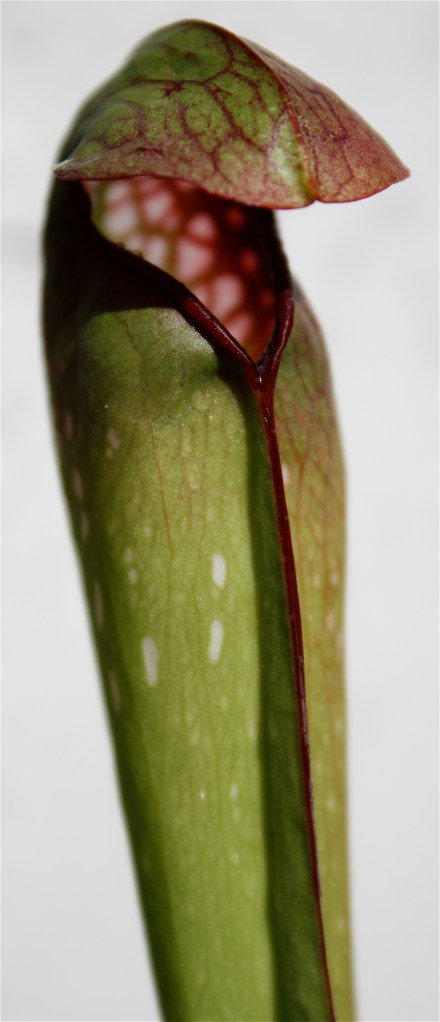
Smile.
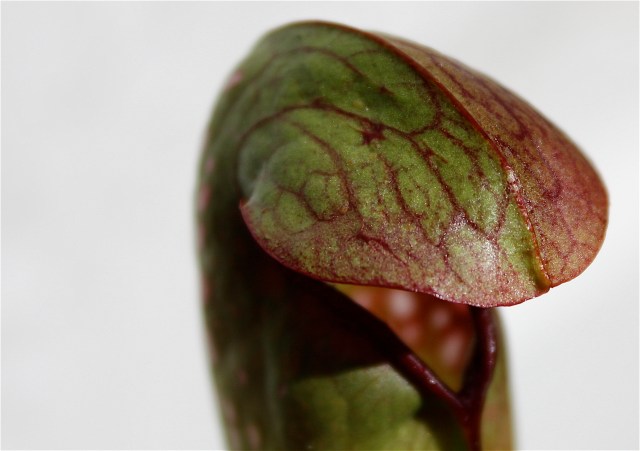
Laugh.

Eat.
Cucumber, Cucumis sativus

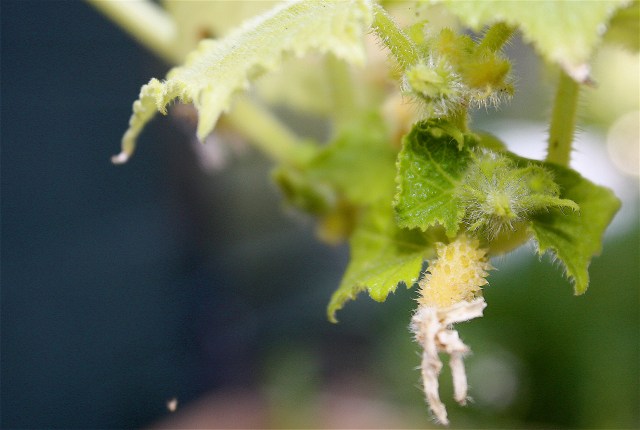

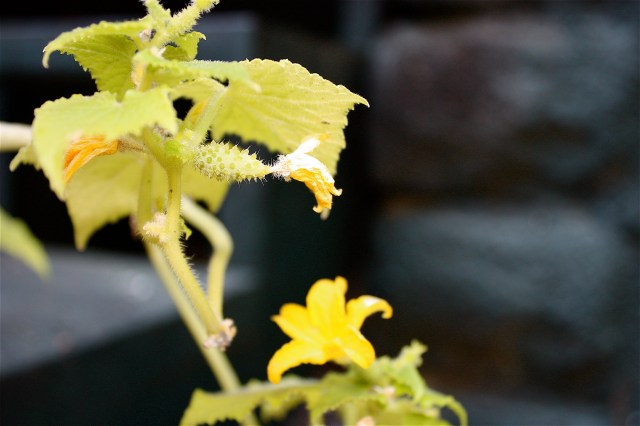
This is my first go at cukes, and they are curious. The vine flowered a sunshine yellow over a month ago, and I’m waiting for green oblongs. Instead, pokemon-esque footballs connect runners to flowers.
Pearl Fryar’s Topiary
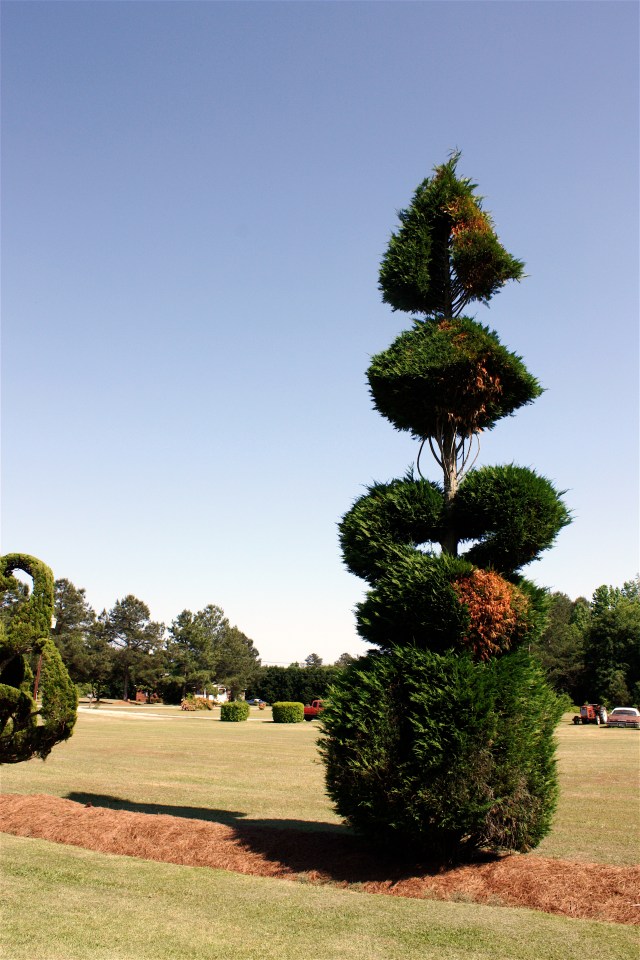
Last month I drove to Bishopville, a small rural town in Central South Carolina. It’s home to a kind soul named Pearl Fryar. Around three thirty, he was speaking to a group of middle-aged tourists. Unbeknownst to Pearl, his website states that the gardens close at four on Saturdays, but after the group left, our conversation lengthened with afternoon shadows.
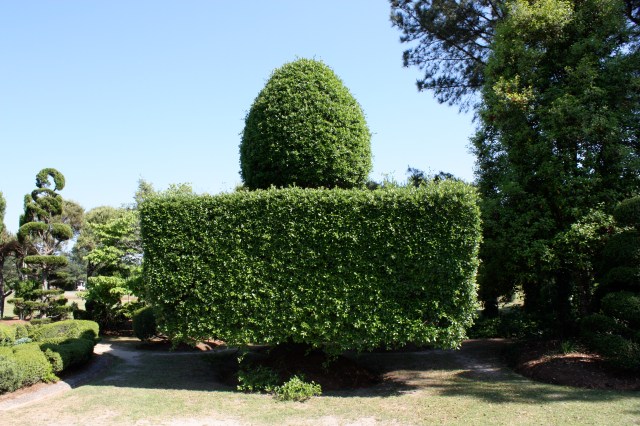
After working more than thirty years in a can factory while sculpting trees and shrubs each night, Fryar has managed to transform pockets of the depressed town into fantastical worlds of living sculpture. Pearl’s self-taught craft began with discarded “junk plants” from a local nursery.

“How did I impress her (Martha Stewart), cutting bushes.”

“You should be nice to everybody.”

“We have a system in this country. The system is set up for failure.”

“If you want to enjoy life, keep it simple.”
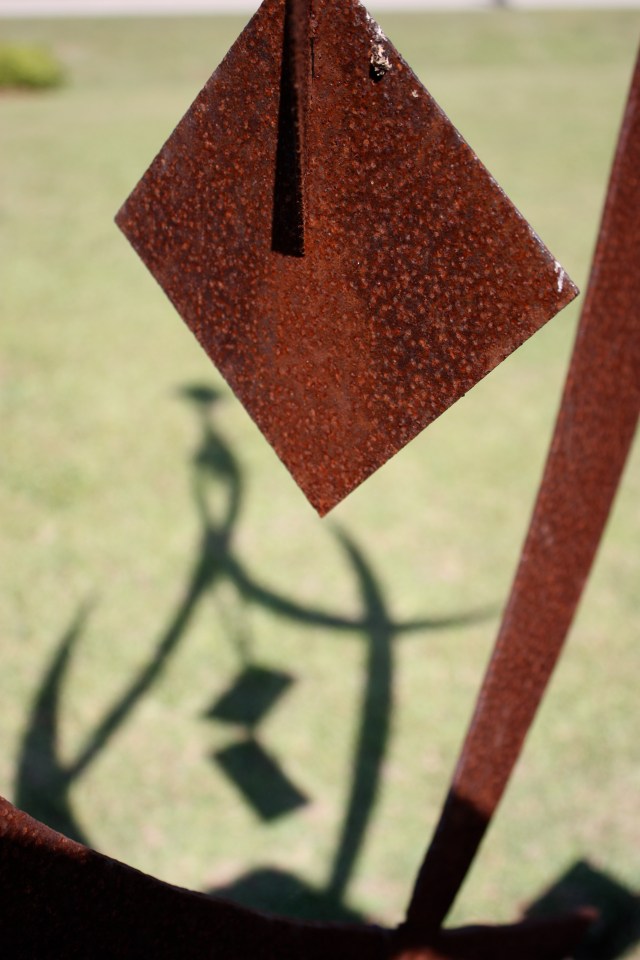
“If you got an idea, and can’t afford it, start it.”
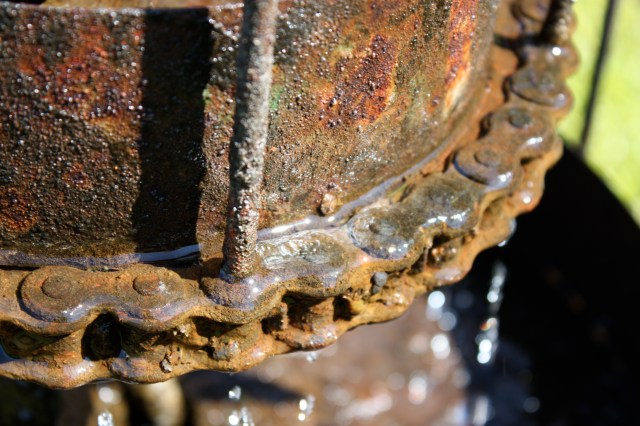
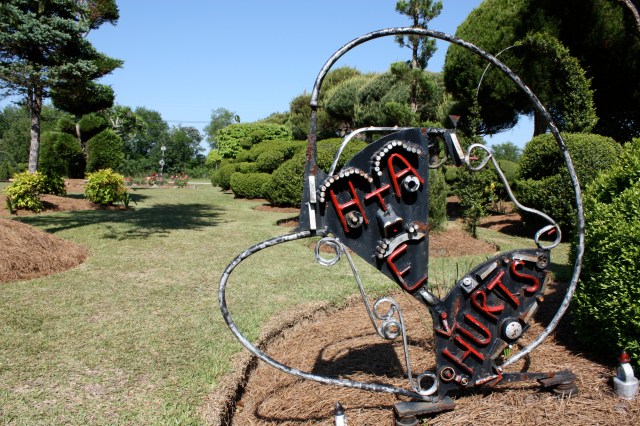
Pearl Fryar’s latest endeavor is metal sculpture, which he calls “junk art.”
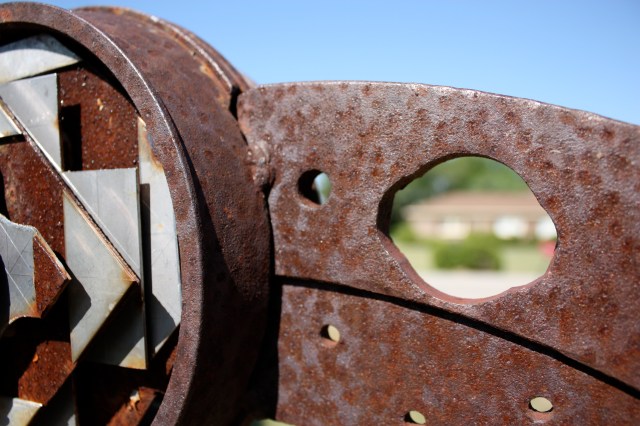
Hardly junk.

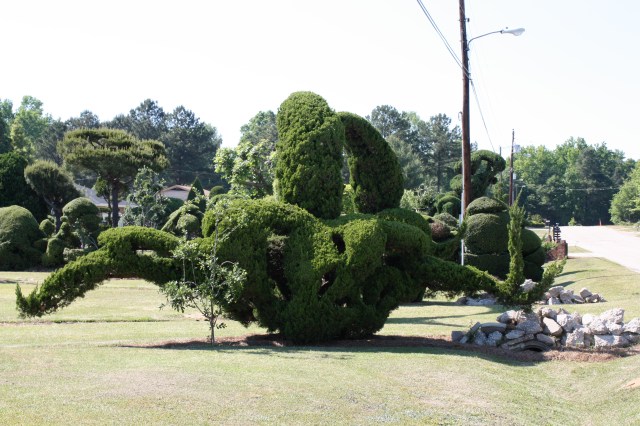
Fryar Topiary Gardens
145 Broad Acres Rd
Bishopville, SC 29010-2819
http://www.fryarstopiaries.com

Click here to read more about the visit.
Carrion Plant, Stapelia gigantea

While writing on the porch last October, I sensed movement behind me. The twisted tip of a large, light yellow carrion flower pod began to unravel. I watched as four slits widened a few centimeters at a time. Over the course of forty-five minutes, it splayed wide open in a ten inch base jump from the shelf.
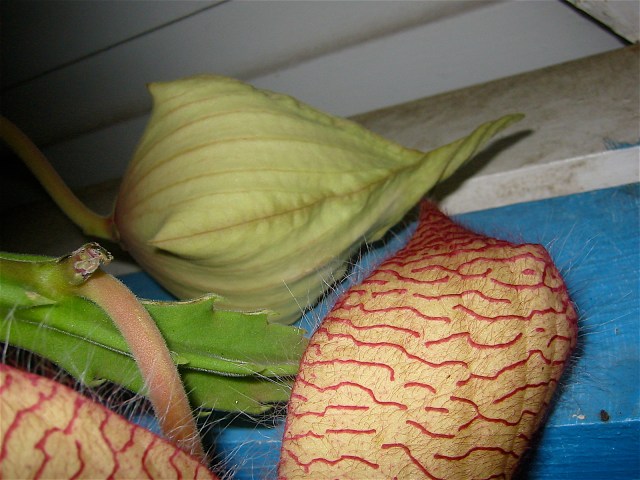

Within minutes, a large black fly arrived to sample the thick white chunks in the center of a flower that smelled like three-day-old roadkill in late July.
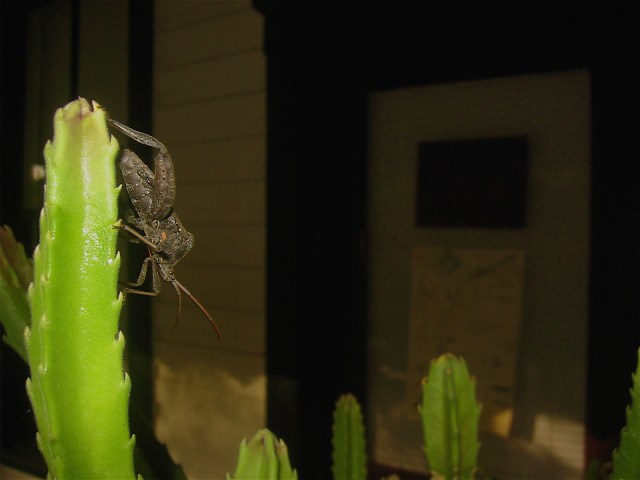
The squatting stink bug delivers the stink eye.
 Pedagogy of the Plants